Vimanam
Traditional Board Game of India
Kurankatta / Vimanam
Kurankatta, presented here through the Vimanam race-board format, is a traditional Indian two-player board game that blends chance, counting, and strategy. Players race their pawns around a marked path using cowrie-shell throws or stick-dice scores, with the aim of bringing all pieces safely home first.
Introduction
India has a rich tradition of board games that combine entertainment with logic, mathematics, and life lessons. Vimanam is one such traditional race game, and the name means “a flying chariot” or “a celestial vehicle.”
The game is associated with South India and is said to have been played during temple festivals and family gatherings. Its theme symbolically represents a journey toward a higher goal, with each player trying to reach the heavenly destination first.
Game Board
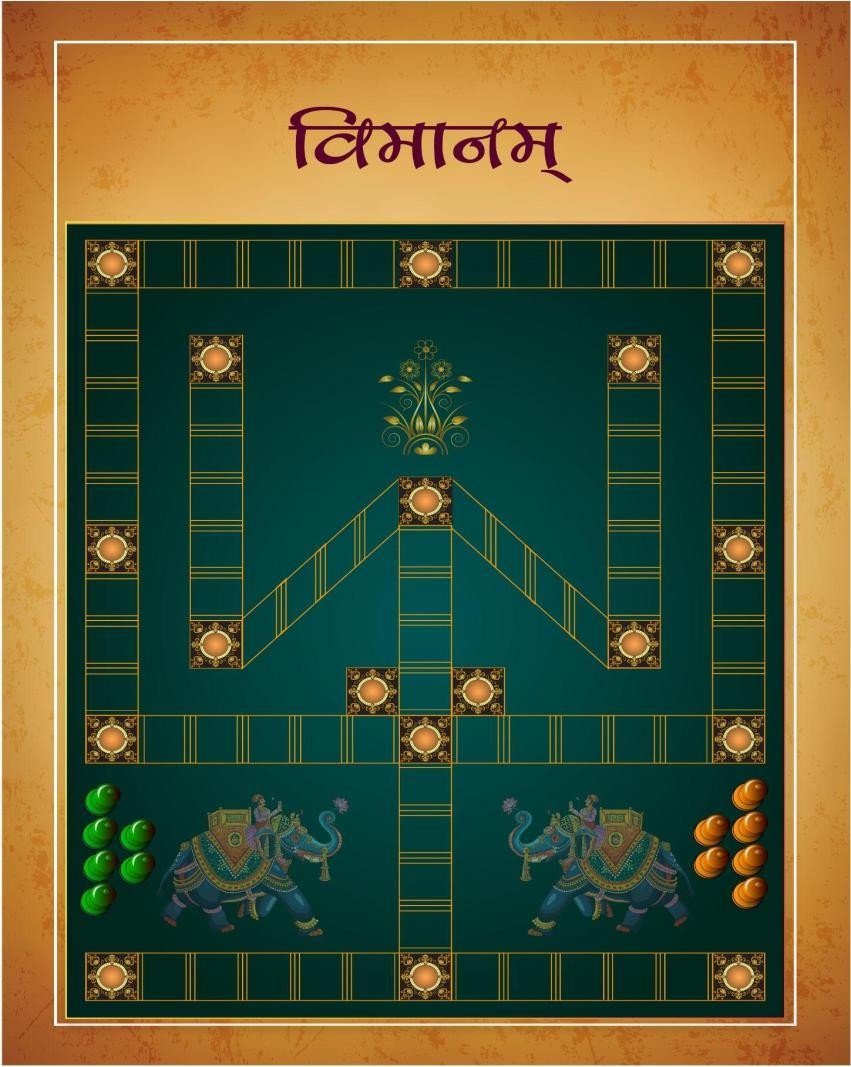
The Setup
The game is played by two players. Each player controls six pawns and uses throws of cowrie shells or cuboid dice to move them across the board.
Items Needed
- A Vimanam board
- 6 pawns for each player
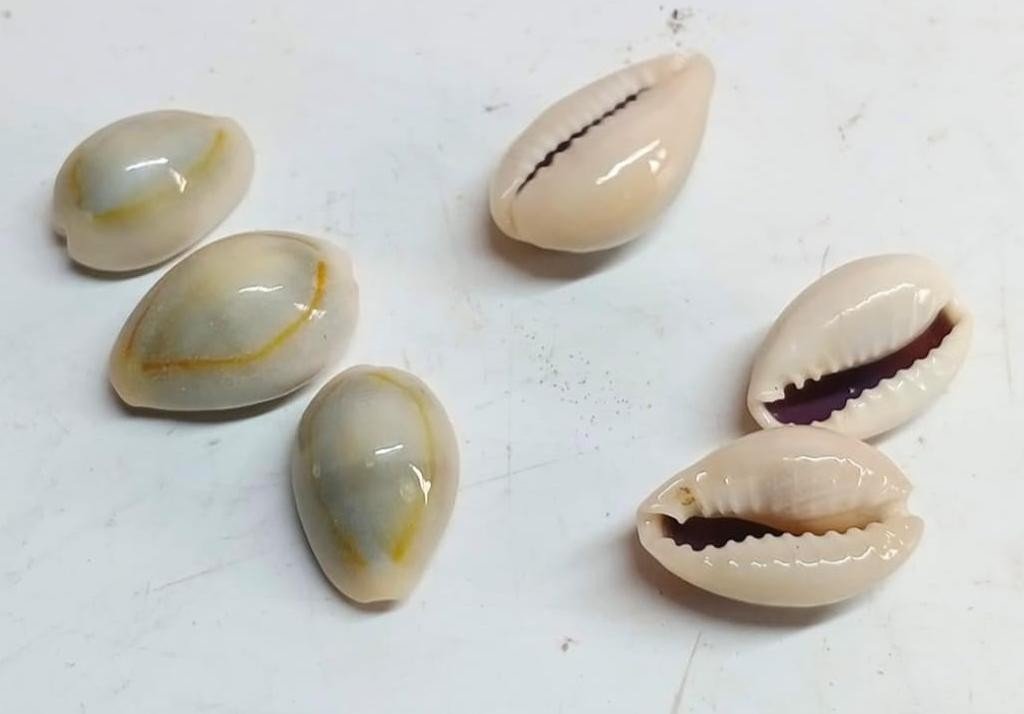
- 6 cowrie shells or 2 cuboid dice for scoring
The objective is to move all your pawns around the track and be the first to bring them to the finishing point.
Board Layout
Tail Path
The starting track where pawns first enter the board.
Outer Circuit
The main loop where most of the race movement happens.
Inner Arm
The final inward path that leads to the player’s home square.
Safe Squares
Special protected squares where pawns cannot be captured.
Scoring by Cowries
All six cowries are dropped together, and the score depends on how many land open-side up. Only one pawn may be moved for each throw.
| Cowries Up | Move | Special Action |
|---|---|---|
| 1 up | Move 1 | Roll again |
| 2 up | Move 2 | No extra action |
| 3 up | Move 3 | No extra action |
| 4 up | Move 4 | No extra action |
| 5 up | Move 5 | Roll again |
| 6 up | Move 6 | Roll again |
| 0 up (all down) | Move 12 | Roll again |
Scoring Reference
Entering a Pawn
To bring a pawn from home onto the board, a player must throw 1 or 5. If desired, that same score may instead be used to move a pawn that is already active on the board.
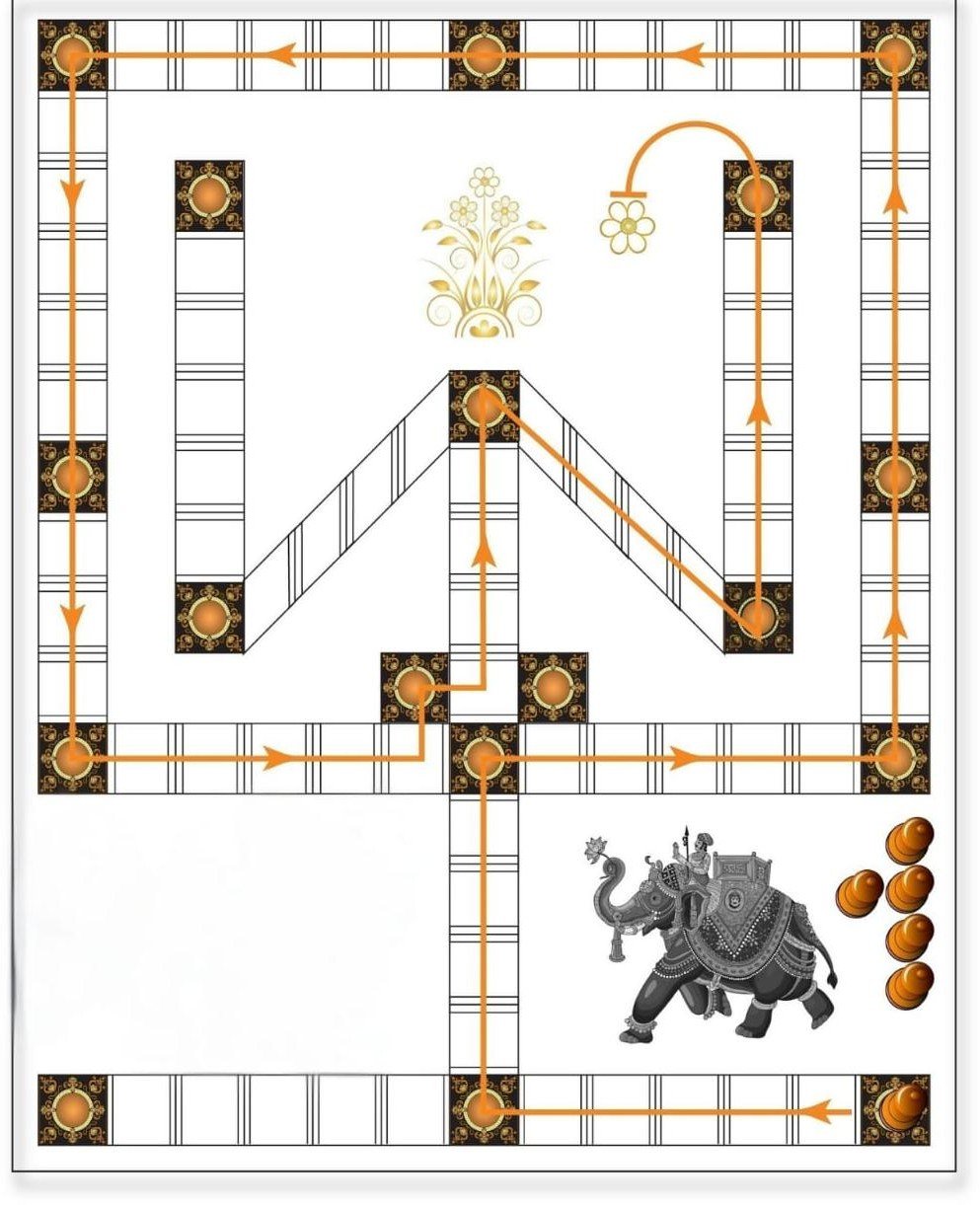
Movement Route
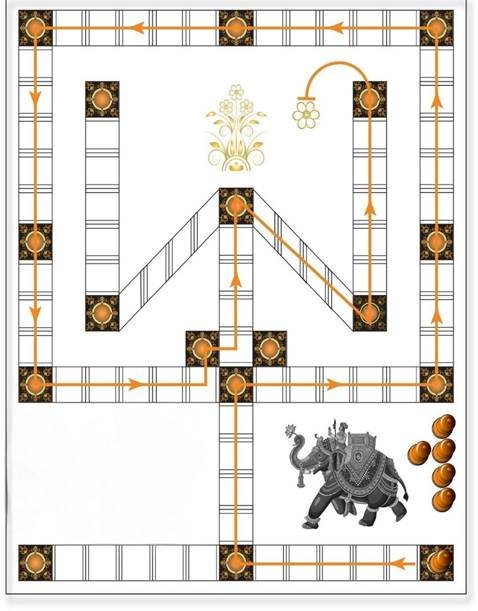
Method of Play
- Enter a pawn through the tail starting square.
- Move forward along the main outer circuit.
- Complete one full loop around the board.
- Return inward through the connecting bridge.
- Travel along the inner arm toward the final home square.
- An exact count is needed to finish a pawn.
Capturing
If your pawn lands on a square occupied by an opponent’s single pawn, that opposing pawn is captured and sent back to home. A successful capture also gives you an extra throw.
Pawns standing on safe squares cannot be captured.
Mandatory Capture Rule
A player must have captured at least one opponent pawn during the game before any of their pawns are allowed to enter the inner arm.
Once this requirement is met, all of that player’s pawns become eligible to move into the final inward path later in the game.
Exact Finish
A pawn can reach the final home square only with an exact throw. If the score is greater than the number of spaces needed, that pawn cannot be finished on that turn.
Extra Turns
A player receives another throw after scoring 1, 5, 6, or 12, or after capturing an opponent’s pawn.
If no pawn can legally use a throw, that throw is wasted and the turn ends unless an extra-throw condition already applies.
Winning the Game
The winner is the first player to move all six pawns to the final home square.
Example Turn
If you throw a 5, you may either enter a new pawn or move one already on the board. Because 5 grants an extra throw, you then throw again and may move any one pawn by the new result, such as 3 spaces.
Skills Developed
Thinking Skills
- Counting and basic mathematical thinking
- Understanding chance and probability
- Strategic decision-making
Personal and Social Skills
- Patience and concentration
- Turn-taking and rule-following
- Friendly competition and social interaction
Glossary
| Term | Meaning |
|---|---|
| Vimana | Heavenly chariot |
| Cowrie Shells | Small shells used as traditional dice |
| Griha | Home base where pawns begin |
| Mandala | Sacred design representing the universe |
| Safe Zone | Protected space where pawns cannot be attacked |
| Gotika | Pawn or playing piece |
| Puccha | Tail |
| Setu | Bridge |
| Cakra | Loop or track |
| Bahu | Arm |
| Puspa-sthana | Rosette or transition square |
| Grahana | Capture |
| Abhaya-sthana | Safe zone |
| Uttarana | Bearing off or final movement home |
| Daiva | Fortune |
| Purusakara | Effort or human endeavor |