Sekkor
Traditional Sport of India
Sekkor
Sekkor is a traditional tribal outdoor game from Jharkhand associated especially with the Ho, Munda, and related indigenous communities. It is a vigorous game of striking, force, coordination, and group competition, deeply rooted in local heritage and seasonal community life.
About the Game
Sekkor is a traditional indigenous game played with a specially shaped wooden object and a rope-based throwing method. The main action involves striking target sekkors placed in the playing area and driving them out of the boundary through skillful impact.
The game combines strength, precision, timing, and tactical judgment. It also reflects the communal and festive spirit of tribal village life in Jharkhand.
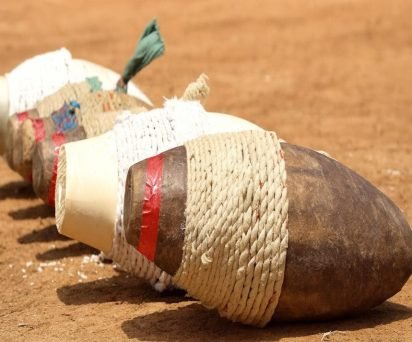
Traditional Sekkor
Origin
Sekkor has deep roots in the tribal traditions of Jharkhand and is particularly associated with the Ho and Munda communities. It has been passed down through generations as both a recreational game and a marker of communal identity.
Traditionally, the game was played after the harvest season and during festivals or village gatherings. In this setting, it was not only entertainment but also a display of skill, strength, and group pride.
Equipment
Sekkor
A cylindrical, oval-shaped wooden object, traditionally made from Kusum or Sal wood. It is carved to rotate on its axis and to travel effectively when thrown.
Master Sekkor
The striking sekkor used by the player to hit the target sekkors placed in the center of the ground.
Rope
A thick cotton rope, often around 10 feet long, wrapped around the axis of the master sekkor and unwound during the throw to generate force and distance.
The Setup
Playground
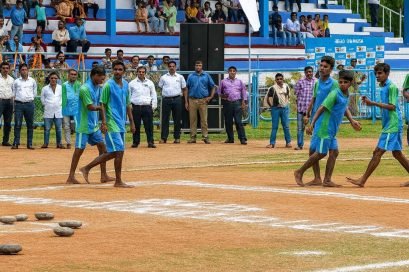
Sekkor is played on an open ground with a clearly marked central area and boundary. In some described versions, the field may be rectangular, while the central target area may also involve a marked circle.
Players
Team sizes may vary by local tradition. Some descriptions mention a minimum of five players per team, while others describe larger teams of seven to eleven players.
Target Arrangement
The opponent’s sekkors are placed in the center or along a marked middle line. The striking side takes position near the boundary and prepares to throw.
The Play
- The game begins with the target sekkors placed in the middle of the field.
- A player wraps the rope around the master sekkor.
- Using a lifting and throwing motion, the player releases the master sekkor so that it unwinds and strikes the target.
- The objective is to hit the opponent’s sekkor with enough force to displace it and send it out of the marked boundary.
- Players take turns attempting accurate and powerful strikes.
The key challenge is controlling the direction, spin, and impact of the thrown sekkor.
Game in Action
Scoring
Points are awarded when a team successfully strikes the target sekkor out of the boundary. Some versions also award additional points when a player brings or sends the sekkor back effectively into play.
In the description provided, a team earns five points for driving the sekkor out of the boundary. Local rules may vary in how points are counted and how long the round continues.
Winning
The winning team is the one that scores more points within the fixed playing period or under the agreed scoring format. Because the game is time-bound in many traditions, both speed and efficiency matter.
Skills Required
Physical Skills
- Strong leg and body coordination during the throwing action.
- Firm grip and control over the rope and sekkor.
- Balance, force, and rotational precision.
Game Skills
- Accurate aim and sharp eyesight.
- Judgment of direction and striking angle.
- Tactical decision-making and timing in team play.
Benefits of Playing Sekkor
Physical and Mental Benefits
- Improves coordination, reflexes, and balance.
- Builds stamina, muscular control, and strength.
- Encourages focus, planning, and quick decisions.
Social and Cultural Benefits
- Strengthens team spirit and discipline.
- Supports community gathering and participation.
- Helps preserve indigenous tribal heritage and identity.
Cultural Significance
Sekkor is more than a sport; it is a living expression of the physical culture and social traditions of Jharkhand’s tribal communities. Played during festivals, open-ground contests, and seasonal gatherings, it reflects unity, endurance, and local craftsmanship.
Its continued remembrance is important for preserving indigenous games that carry both athletic and cultural value.
Note
Sekkor stands out as a powerful example of India’s lesser-known traditional sports, where simple handmade equipment creates deep tactical and physical challenge. Reviving such games can support both cultural continuity and meaningful physical education.