Kalaripattu
Traditional Sport of India
Kalaripayattu
Kalaripayattu is a traditional martial art from Kerala, known for combining agility, strength, discipline, focus, and spiritual awareness. Its name comes from the Malayalam words Kalari meaning training ground and Payattu meaning practice or combat.
About the Art
Kalaripayattu is one of India’s best-known traditional martial systems and is often described as an art that trains both body and mind. It develops strength, flexibility, balance, awareness, and control through a structured progression of physical and mental practice.
More than a fighting system, it also teaches restraint, discipline, respect for the teacher, and harmony between physical effort and inner calm.
Origin
Kalaripayattu is deeply rooted in Kerala’s martial heritage and is associated in tradition with ancient warrior training. It is linked with mythic lineages that connect the Northern school with Sage Parashurama and the Southern school with Agasthya Muni.
Over time, Kalaris became not only places of martial training but also centers of discipline, physical education, healing knowledge, and spiritual learning.
Training Tradition
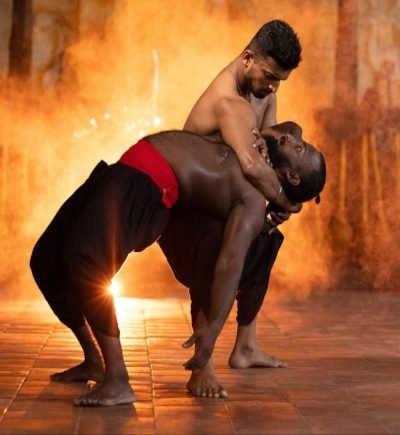
Practice in Action
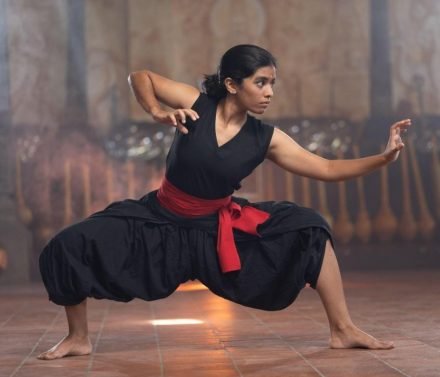
The Setup
Kalari
A rectangular earthen training space, traditionally lowered into the ground.
Uniform
A simple cotton practice cloth that allows free movement.
Oil
Medicinal oil may be applied to improve flexibility and help prevent injury.
Weapons
Advanced training may include wooden and metal weapons used with discipline and care.
Training Stages
Stage 1: Meipayattu
This stage focuses on body conditioning through sequences of stretches, kicks, jumps, turns, and coordinated movements. It builds balance, stamina, flexibility, and control.
Stage 2: Kolthari
Students begin training with wooden weapons such as sticks and staffs. This stage develops timing, coordination, and defensive awareness.
Stage 3: Ankathari
At this level, students learn the use of metal weapons such as sword, shield, spear, and dagger. Training emphasizes precision, responsibility, and respect.
Stage 4: Verumkai
This is the stage of empty-hand combat, including striking, blocking, grappling, and self-defense techniques. The focus remains on restraint and disciplined use of skill.
Stage 5: Kalari Chikitsa
Traditional healing knowledge, massage, and treatment methods are also part of the learning system. This helps balance martial training with recovery and body care.
Techniques and Movements
Basic Elements
- Chuvadukal: Basic footwork and movement sequences.
- Vayttari: Oral commands or training chants given by the instructor.
- Vadivu: Animal-inspired stances and postures.
Animal Postures
- Gaja Vadivu: Elephant stance representing strength.
- Simha Vadivu: Lion stance representing courage.
- Kukuda Vadivu: Rooster stance representing alertness.
- Marjara Vadivu: Cat stance representing grace and timing.
These techniques help students develop rhythm, precision, control, and body-mind coordination.
Rules and Discipline
- Students bow to the Kalari, the teacher, and the tradition before and after practice.
- Training often begins with prayer, respect, or silent focus.
- Violence outside the training context is not permitted.
- Weapons must be treated with respect and never misused.
- Cleanliness, punctuality, and mental calm are considered part of training discipline.
Safety Measures
- Always warm up before training.
- Practice only under the supervision of a qualified teacher or Gurukkal.
- Use proper protection and controlled movement during weapon training.
- Focus on control rather than force.
- Respect training partners and never strike with intent to injure.
Benefits of Kalaripayattu
Physical Benefits
- Improves flexibility, balance, and stamina.
- Strengthens muscles and joints.
- Enhances coordination and reflexes.
- Develops body control and movement efficiency.
Mental and Emotional Benefits
- Builds focus and confidence.
- Encourages discipline and patience.
- Promotes emotional balance through calm practice.
- Develops self-restraint and inner awareness.
Cultural and Moral Values
- Instills pride in India’s martial heritage.
- Encourages humility, respect, and non-violence.
- Fosters unity of body, mind, and spirit.
- Preserves a living traditional art of Kerala.
Notes
Kalaripayattu is not only a martial practice but also a disciplined way of life. It teaches that true strength lies in control, balance, courage, healing, and respect.
This ancient art continues to inspire learners by connecting physical excellence with moral discipline and cultural heritage.