Dorda Kud
Traditional Sport of India
Daor Khel / Dora Udagodu / Rope Skipping
Rope skipping, also known as jump rope, is one of the simplest and most effective forms
of physical activity. It combines rhythm, endurance, coordination, and fun, and has grown
from a traditional play activity into a recognized competitive sport.
Origin
Rope skipping is an ancient activity with roots in rhythmic jumping practices that have
appeared in many cultures for centuries. In India, traditional jumping games using handmade
ropes of jute, coir, or plant fiber were common in villages and schools.
Over time, what began as joyful play also became part of physical conditioning and athletic
training. Today, rope skipping is practiced both as a recreational activity and as an organized sport.
Traditional Connection
About the Game
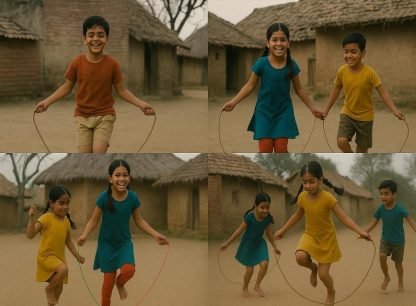
Rope skipping involves jumping over a rope that passes repeatedly under the feet and over the head.
It can be done by one person or by a group working in rhythm together.
The activity develops stamina, balance, timing, and concentration, while also offering a fun way
to stay physically active.
The Setup
Skipping Rope
A rope made of plastic, cloth, leather, or traditional natural fibers.
Handles
Attached at both ends for grip and control.
Surface
A flat, smooth, and non-slippery ground is ideal.
Footwear
Light sports shoes are preferred, though traditional play was often done barefoot.
There are two main formats of rope skipping: individual exercise and team or group play.
The Play
Individual Skipping
- A single player swings the rope and jumps over it in steady rhythm.
- The aim is to continue jumping smoothly without missing the rope.
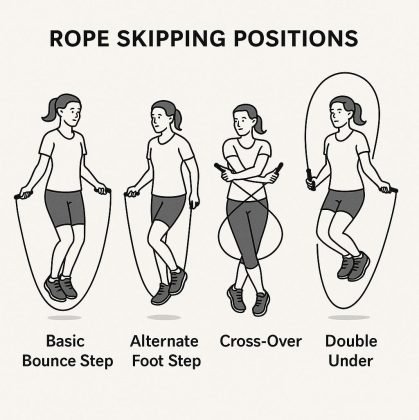
Common Techniques
- Basic jump: Both feet together.
- Alternate foot step jump: Feet alternate like light jogging.
- Criss-cross jump: Arms cross and uncross while skipping.
- Double under: The rope passes twice under the feet in one jump.
Individual Skipping
Team or Group Skipping
In group skipping, two or more players swing one or two ropes while others jump in rhythm.
This version demands communication, timing, and coordination.
- Double Dutch: Two long ropes turned in opposite directions.
- Relay skipping: Players take turns as part of a team race.
- Synchronized skipping: Teams perform coordinated routines, sometimes to music.
Rules
- Each player or team skips for a fixed duration, often between 30 seconds and 3 minutes.
- Scores may be based on successful jumps, speed, or synchronized performance.
- If the rope catches under the feet, the player may lose rhythm or receive a deduction in competition format.
- Competitions can take place at school, district, national, and international levels.
Benefits
Physical Benefits
- Improves heart and lung endurance.
- Builds leg strength and flexibility.
- Enhances balance and body coordination.
- Supports weight management and overall fitness.
Mental and Social Benefits
- Develops rhythm and concentration.
- Encourages discipline and focus.
- Promotes teamwork in group events.
- Builds confidence through repeated practice.
Safety Measures
- Warm up before skipping to prevent strain.
- Use the correct rope length for the player’s height.
- Practice on a soft or even surface to protect joints.
- Maintain proper posture with elbows close to the body and wrists controlling the rope.
Strategies
- Begin with slow, controlled single jumps before increasing speed.
- Practice rhythm by counting beats or using music.
- Keep elbows close to the body for better rope control.
- In team formats, coordinate movement and timing carefully with others.
Common Mistakes to Avoid
- Using a rope that is too short or too long.
- Jumping too high and wasting energy.
- Moving the whole arms too much instead of using wrist action.
- Skipping without warm-up or on uneven ground.
Glossary
| Term | Meaning |
|---|---|
| Rhythm | A regular pattern of movement or sound. |
| Coordination | The ability to move different body parts smoothly together. |
| Endurance | The ability to continue physical activity for a long period. |
| Double Dutch | A skipping format using two ropes turned in opposite directions. |
| Sharirika Vyayam | A traditional Indian term for physical exercise. |
| Leela | Playful activity viewed as a mode of learning and expression. |
Notes
Rope skipping is more than a game. It is a blend of fitness, rhythm, discipline, and joy
that connects traditional play with modern sport.
As children and athletes practice skipping, they engage with a form of movement that supports
health, coordination, and a continuing culture of active play.