Adu Puli Attam
Traditional Games of India
Adu Puli Attam
Adu Puli Attam is a traditional strategic board game that represents the contest
between tigers and goats. It is an asymmetric strategy game in which one side
controls three tigers and the other controls fifteen goats.
Also Known As
Puli Meka, Huli Kattu, Adu Huli Aata, Waag Bakari
Type
Traditional strategy board game
Players
2 players or 2 teams
Origin
Adu Puli Attam is an ancient traditional board game from South India.
Archaeological and architectural evidence suggests that its distinctive board
pattern was engraved on stone floors and temple surfaces in earlier times.
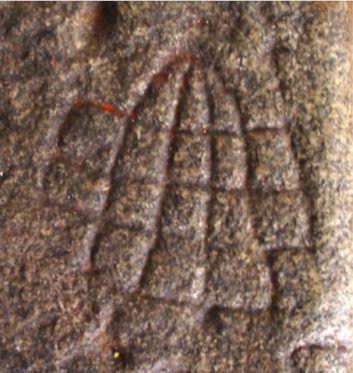
A well-known example is found at the Chamundeshwari Temple on Chamundi Hill
in Mysuru, where the game layout is inscribed on stone. The game reflects
strategic thinking, patience, planning, and cooperation in traditional Indian society.
Old Inscription
The image below shows an old stone inscription of the game layout.
About the Game
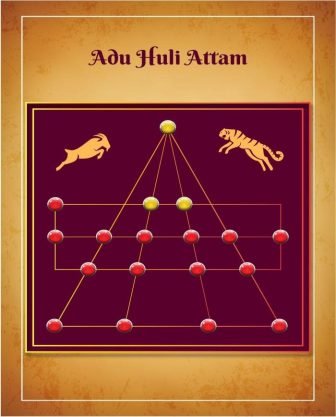
This game is played between two sides. One side controls three tigers, while
the other controls fifteen goats placed on a board made of intersecting lines and points.
The tigers try to capture goats, while the goats try to trap the tigers so they
can no longer move. The game is simple in equipment but deep in strategy.
Game Pieces
The Setup
The Board
A geometric pattern of intersecting lines and points.
Tiger Side
Three tigers try to capture goats by jumping over them.
Goat Side
Fifteen goats try to block and trap all tigers.
Objective
Trap all tigers or capture enough goats to make trapping impossible.
Playing Method
Starting the Game
- All three tigers are placed on the board at the beginning.
- The goats are placed one by one in successive turns.
- During the placement stage, goats do not move; they only occupy positions.
Movement
- Once all goats are placed, both sides can move their pieces.
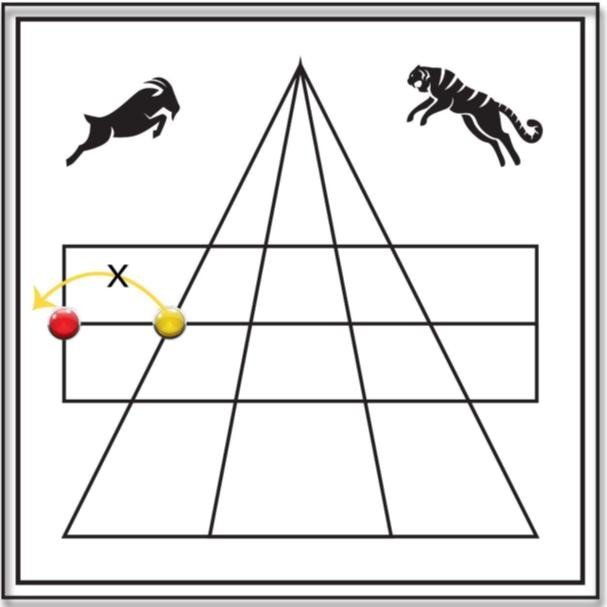
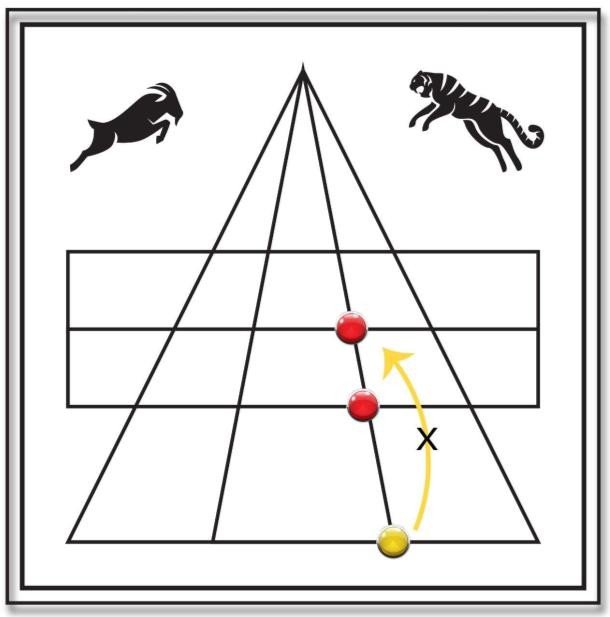
- Pieces move only along the connected lines of the board.
- Both goats and tigers move to adjacent empty points.
Valid Moves
Board Examples
Position Layout
Capturing
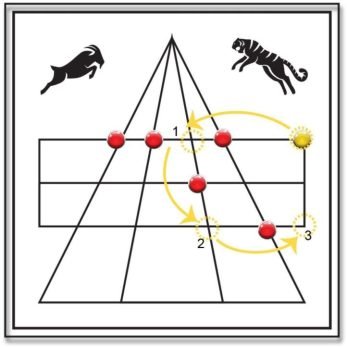
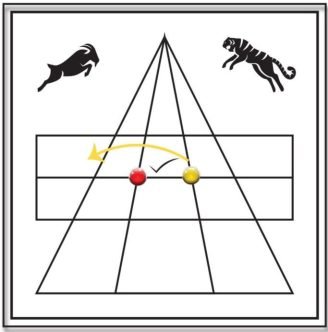
A tiger captures a goat by jumping over it into an empty connected point,
similar to a leap capture in other strategy board games.
- Only one goat can be captured in a single move.
- A tiger cannot jump over another tiger.
- Captured goats are removed from the board.
Capture Example
Winning Conditions
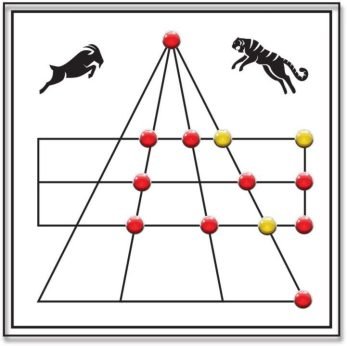
- Goats win if all tigers are trapped and have no legal move left.
- Tigers win if they capture enough goats to prevent a complete trap.
Winning Position
Strategies for Winning
Playing as the Tiger
- Control the center to keep more movement options open.
- Keep the tigers close enough to support each other.
- Plan ahead and predict goat movement.
- Avoid corners and edges where trapping becomes easier.
Playing as the Goat
- Place goats carefully during the opening phase.
- Build barriers along important lines.
- Keep goats grouped to avoid easy captures.
- Trap tigers gradually by reducing their movement area.
Common Mistakes to Avoid
Mistakes by Tiger Players
- Chasing goats without a clear plan.
- Moving into corners too early.
- Separating the tigers too far from one another.
Mistakes by Goat Players
- Placing goats randomly without structure.
- Leaving goats isolated and exposed.
- Blocking their own movement by crowding too early.
- Waiting too long to begin trapping.
Educational Value
Playing Adu Puli Attam develops strategic thinking, planning, decision-making,
patience, and teamwork. It also introduces students to traditional Indian game
design and helps preserve cultural heritage through play.